Researchers from 18 Countries and Territories Converge at ATC 2026
Research teams from 18 countries and territories had 160 papers accepted at the 2026 International Conference on Advanced Technologies for Communications (ATC 2026). Hosted by Quy Nhon University, the conference opened on the morning of 15 October with the aim of supporting Vietnam’s goal of mastering strategic technologies.
On the morning of 15 October, the 2026 International Conference on Advanced Technologies for Communications (ATC 2026), hosted by Quy Nhon University, opened at the International Centre for Interdisciplinary Science and Education (ICISE) in Quy Nhon Nam Ward, Gia Lai Province. It received research contributions from 19 countries and territories. The Radio and Electronics Association of Vietnam (REV), the IEEE Communications Society (IEEE ComSoc) and Quy Nhon University jointly organize ATC 2026, which runs until 17 October.
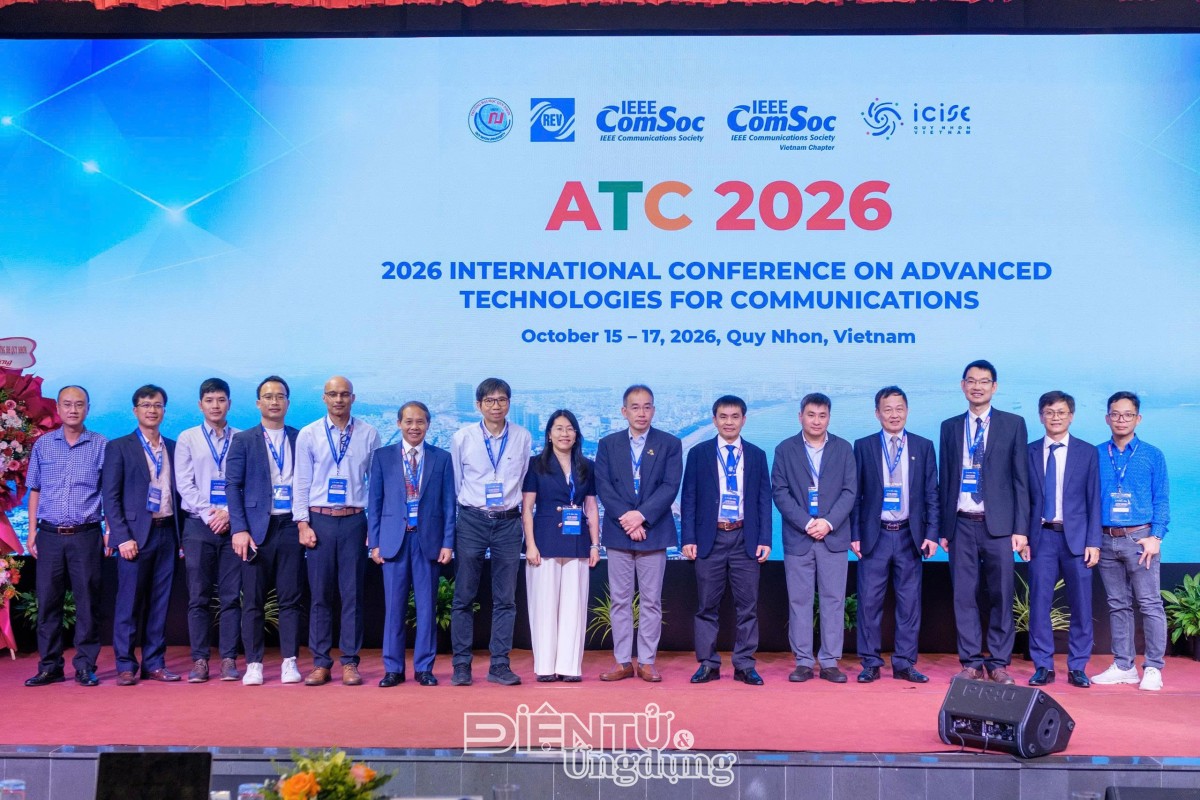
Delegates, speakers and organizers pose for a commemorative photo on stage at the ATC 2026 opening ceremony at ICISE, Quy Nhon.
ATC 2026 Contributes to Vietnam’s Mastery of Strategic Technologies
In his opening address, Mr. Doan Quang Hoan, Vice President of REV, noted that the conference attracted strong interest from the international research community. It received 280 paper submissions involving 1,068 author contributions from 19 countries and territories across Asia-Pacific, Europe and North America. The authors came from countries including Japan, South Korea, India, Malaysia, Bangladesh, Australia, Russia, France, Germany, Belgium, the United Kingdom, the United States and Canada, making the conference an international academic forum in Vietnam’s central coastal city.
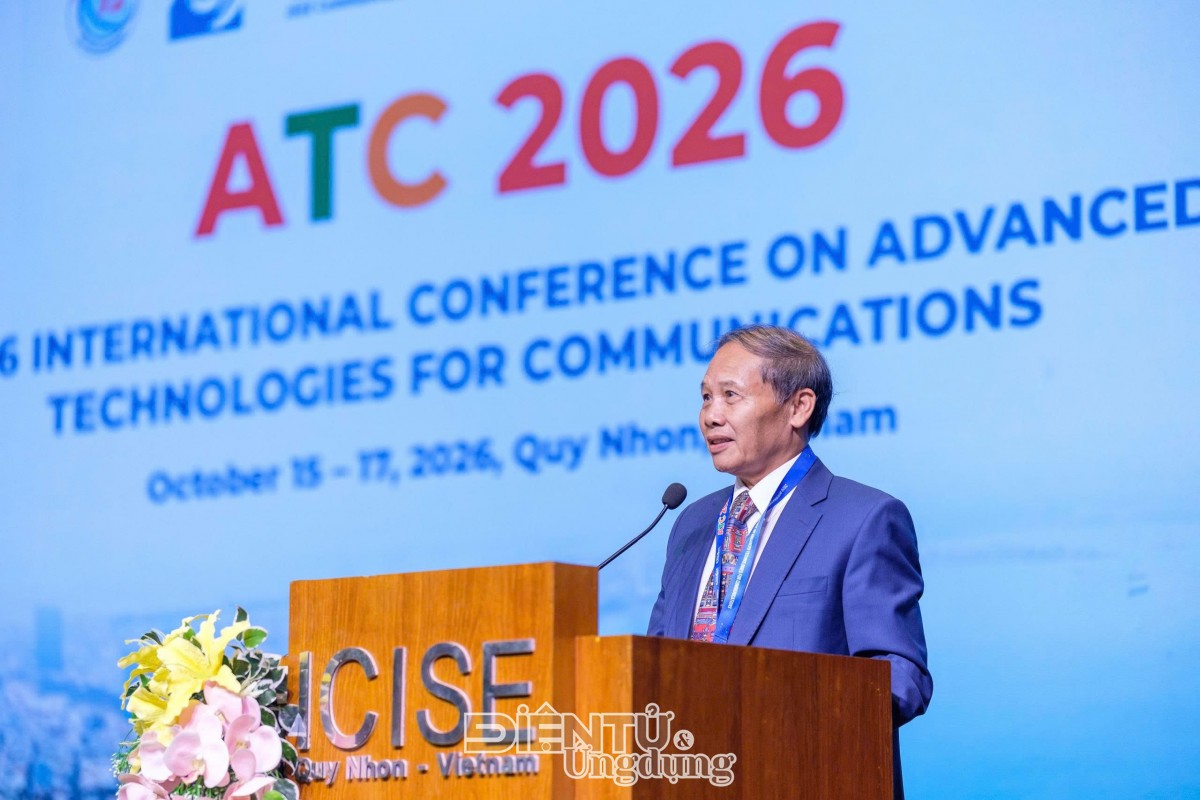
Mr. Doan Quang Hoan, Vice President of the Radio and Electronics Association of Vietnam, delivers the opening address at ATC 2026.
Following the peer-review process, the ATC 2026 Organizing Committee accepted 160 of the 280 submitted papers, an acceptance rate of 57.1%. Submitted papers had an average of 3.8 author contributions each, compared with 4.4 for accepted papers. This suggests that papers passing peer review typically involved larger author teams than the overall average. Of the 1,068 initial author contributions, 705, or about 66%, belonged to accepted papers, with authors from 18 countries and territories.
Authors from Europe stood out, with 31 of their 36 contributions appearing in accepted papers. This acceptance rate of 86.1% was well above the conference-wide rate, and it raised Europe’s share of author contributions from 3.4% at submission to 4.4% in the final program. All 160 accepted papers will be included in the ATC 2026 proceedings. The REV Vice President described these figures as impressive, reflecting the scale and outcomes of this year’s conference.
Speaking on behalf of the host institution, Assoc. Prof. Dr. Doan Duc Tung, Rector of Quy Nhon University, said the university was honored to co-organize ATC 2026 with REV and IEEE ComSoc at ICISE. He highlighted the significance of the conference’s return to Quy Nhon after it was last held there in 2017. He also expressed his hope that the event would create further opportunities for Vietnamese and international scientists and experts to engage in academic exchange, share ideas and advance research collaboration in communications and related technologies.
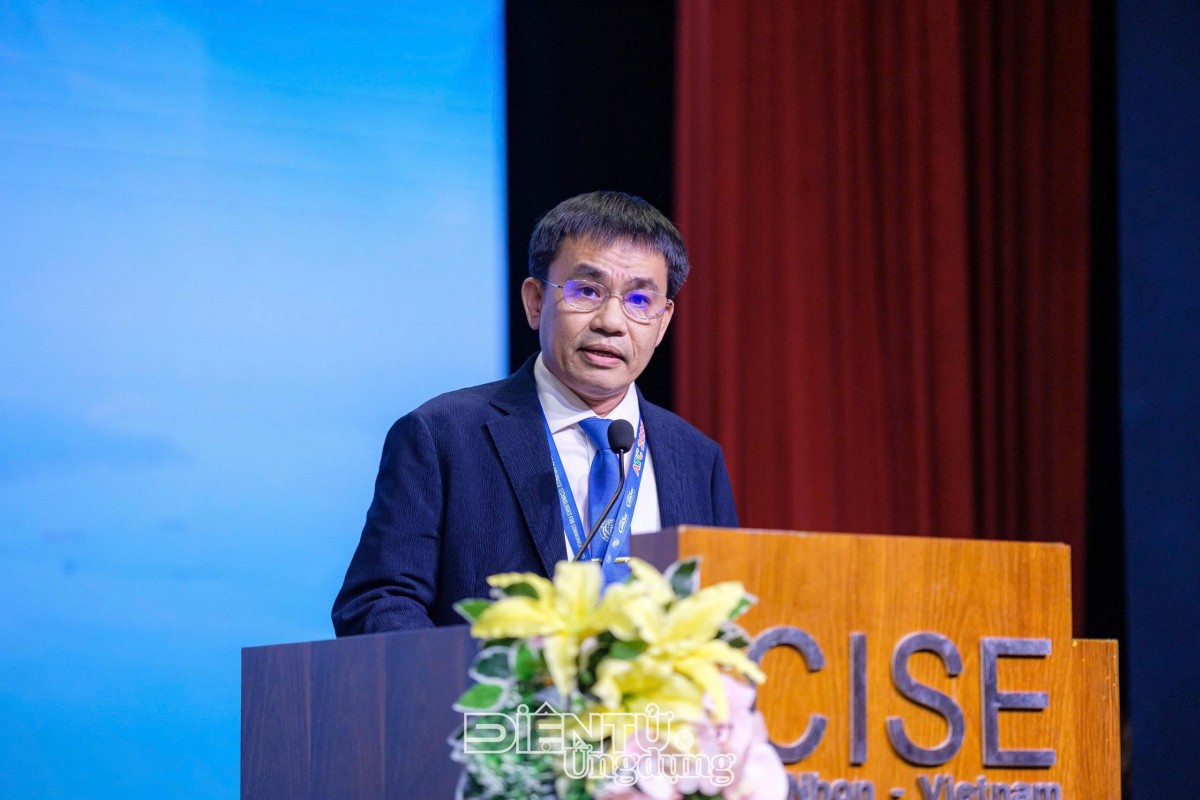
Assoc. Prof. Dr. Doan Duc Tung, Rector of Quy Nhon University, delivers a welcome speech to ATC 2026 delegates.
With 160 papers accepted out of 280 submissions, ATC 2026 maintains the rigorous selection standards that characterize the forum. Since its establishment in 2008, ATC has become an established venue within Vietnam’s scientific community in electronics, communications and information technology. It connects Vietnamese researchers with international peers and fosters cooperation in research and training. Over successive editions, the forum has drawn participation from scientists in many countries, with research that keeps pace with emerging technological developments.
According to Mr. Doan Quang Hoan, REV regards 2026 as a year of particular significance. The Association has called on its scientists and members to focus on the research and development of strategic technologies, in line with Resolution No. 57-NQ/TW of the Politburo on breakthroughs in science, technology, innovation and national digital transformation. This orientation is reflected in the topics selected for ATC 2026, with a program focused on fields that are shaping the future of electronics and communications.
Artificial intelligence is a cross-cutting theme throughout the ATC 2026 program, spanning next-generation wireless information systems to 5G/6G communication networks. Researchers also discuss intelligent and secure communication networks, electronics and integrated circuits, antennas and propagation, microwave engineering, satellite communications, and technologies for intelligent transportation and smart cities. The program covers 38 topics across 10 technical tracks and comprises 5 keynote talks, 17 regular sessions and 7 special sessions over three days. The special sessions on AI-integrated 5G/6G communications and on technologies for transportation and smart cities highlight the interdisciplinary nature of the research and create opportunities to link scientific results with the development of real-world systems and services.
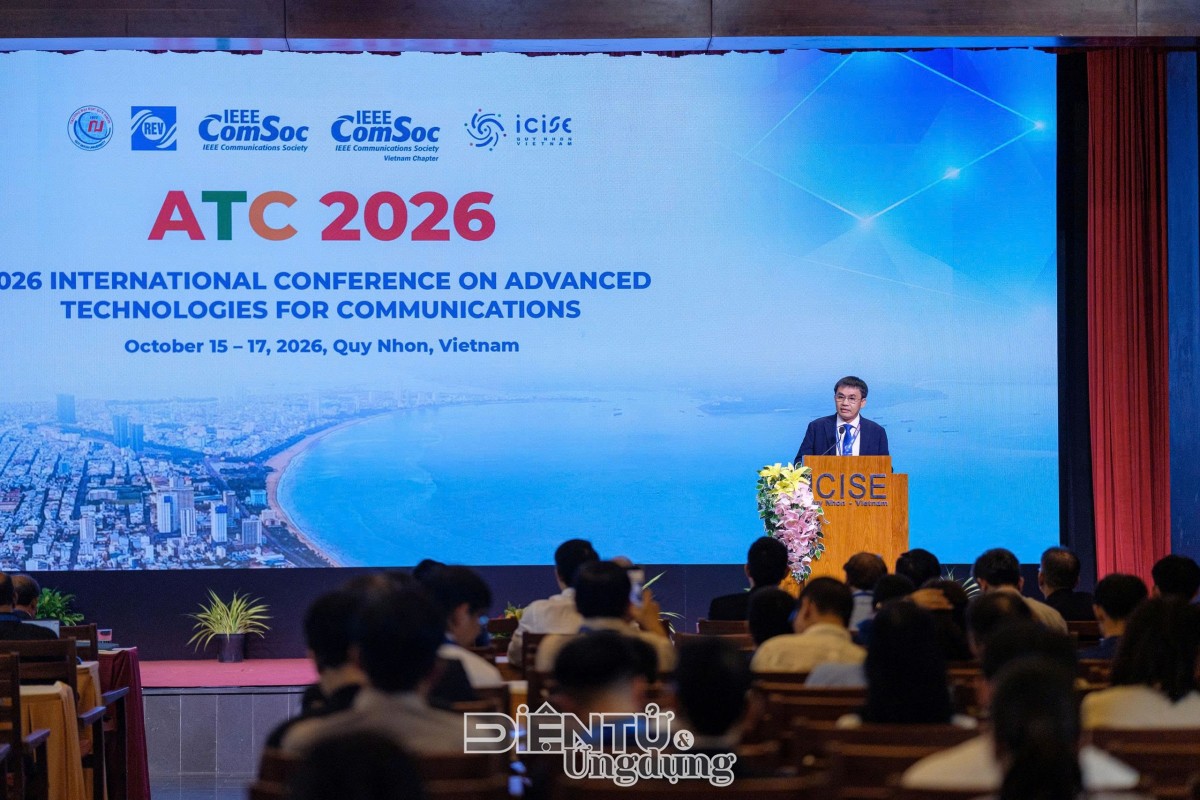
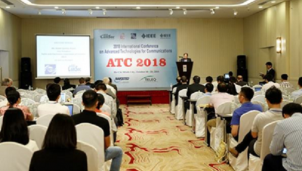
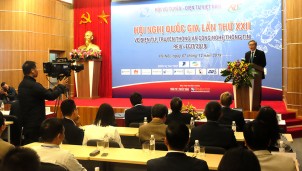
Photo: Delegates attend the ATC 2026 opening session in the ICISE auditorium, Quy Nhon.
Electronics and Telecommunications at the Core of National Strategic Technologies
According to Mr. Doan Quang Hoan, electronics, telecommunications and information technology play an important role in implementing Resolution No. 57-NQ/TW. He expressed his expectation that the research presented at ATC 2026 will make practical contributions to Vietnam, particularly to mastering strategic technologies and accelerating digital transformation. On behalf of REV, he thanked the scientists for their contributions to the conference and acknowledged the Organizing Committee’s sense of responsibility, dedication and professionalism. He also thanked Quy Nhon University, the ICISE Centre and IEEE ComSoc for their active support.
For Quy Nhon University, hosting ATC 2026 aligns with its institutional development strategy. Assoc. Prof. Dr. Doan Duc Tung, the university’s Rector, said that since its establishment in 1977, the university has grown into a multidisciplinary higher education institution. It has steadily strengthened its research capacity and expanded international cooperation, particularly in emerging fields such as artificial intelligence, semiconductors and digital technology. Looking toward 2030, the university has identified renewable energy as a priority field, alongside its goals of improving training quality, advancing scientific research and innovation, and expanding international cooperation.
Delegates and participants gather for a group photo in front of the ICISE building on the opening day of ATC 2026.
Assoc. Prof. Dr. Doan Duc Tung thanked REV, IEEE ComSoc, the Organizing Committee, the Technical Program Committee, keynote and invited speakers, sponsors and all who contributed to ATC 2026. He wished the delegates productive discussions, new partnerships and a memorable stay in Quy Nhon, and he wished the conference every success.
Mr. Doan Quang Hoan recalled that in October 2017 he was also at ICISE to deliver the opening address at the 10th ATC. In his view, the nine years since then have brought clear changes to Quy Nhon in general and to Quy Nhon University in particular. He pointed especially to the growth of the university’s professors and scientific staff, which has given it the foundation to host international scientific events such as ATC 2026.
Through its scientific sessions and networking activities, the Organizing Committee aims to create further opportunities for academic exchange and to strengthen research collaboration among universities, research institutes and technology experts. The conference also helps promote Vietnam’s scientific research environment and brings the image of Quy Nhon and Gia Lai closer to the international scientific community.








Minimum 10 characters Accented Vietnamese Does not contain links
Post a comment